Ethiopia

Volcanoes, Rock Churches and the Ancient North

Duration
14 days
Trip style
Adventure
Effort
Moderate effort
Region
Africa

Isolated civilizations living amongst lunar landscapes.

A two-week circuit through northern Ethiopia covering the alien landscapes of the Danakil Depression, the medieval rock-hewn churches of Lalibela, the royal castles of Gondar and the escarpments of the Simien Mountains.

Ethiopia is one of the oldest continuous civilisations on Earth and one of the least visited countries for its size and density of extraordinary things. It is the only African country never colonised. It has its own calendar, its own alphabet, its own strand of Christianity that predates Rome’s conversion, and a geological rift that is actively splitting the African continent in two. The landscapes range from the highest peaks in sub-Saharan Africa to a depression sitting 125 metres below sea level that is also one of the hottest places on Earth.

This 14-day route covers the four experiences that define northern Ethiopia as a travel destination. The Danakil Depression in the Afar region is a volcanic wilderness of neon sulphur pools, active lava lakes, camel salt caravans and salt flats where temperatures regularly exceed 50°C; it is among the most visually surreal places on the planet and one of the few destinations that photographs genuinely fail to prepare you for. Lalibela is where the medieval Christian kingdom of Ethiopia carved eleven churches directly from solid red rock in the 12th century, each one a complete monolithic structure connected to the others by tunnels and trenches; it remains an active place of pilgrimage and the most important religious site in Ethiopian Orthodox Christianity. Gondar, the 17th-century royal capital, holds six stone castles inside a single fortified compound in a city that was once the administrative heart of an African empire. The Simien Mountains, a day trip from Gondar, offer escarpment walks above 1,000-metre drops where gelada baboon troops of several hundred animals graze on the cliff edges.

The route uses Addis Ababa as its hub, flying domestic legs to each northern destination with Ethiopian Airlines. It is organised, fast-paced and logistics-heavy in a way that rewards preparation. It also carries significant security considerations that are non-negotiable reading before booking.

⚠️ SECURITY ADVISORY: This itinerary includes destinations in the Afar, Tigray and Amhara regions of Ethiopia. As of mid-2026, the US State Department, UK FCDO, and Australian and Canadian governments all maintain Do Not Travel or equivalent advisories for these regions due to armed conflict, kidnapping, civil unrest and landmines. The Danakil Depression sits in the Afar region. Gondar and the Simien Mountains sit in the Amhara region. Abuna Yemata Guh sits in the Tigray region. Lalibela sits in the Amhara region. Tour operators continue to run these routes and travellers continue to go; this itinerary is designed to help you understand the route if you choose to take it. But the security situation is serious, actively evolving and cannot be summarised as manageable in all conditions. Check your own government’s current advisory immediately before booking any element of this trip, and again in the week before departure. Buy comprehensive travel insurance including medical evacuation before travelling to Ethiopia.

Highlights

The Danakil Depression

The Danakil Depression

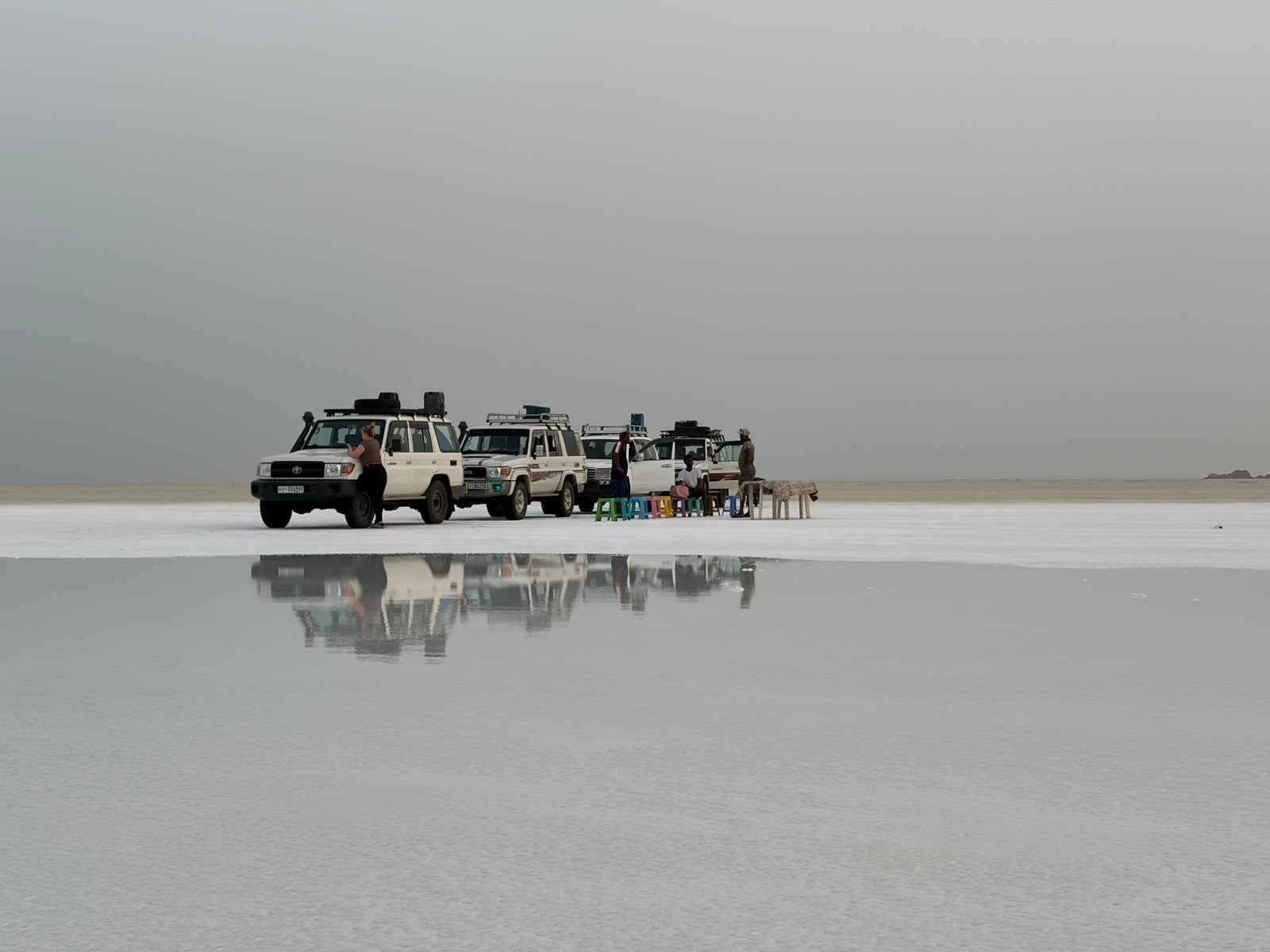
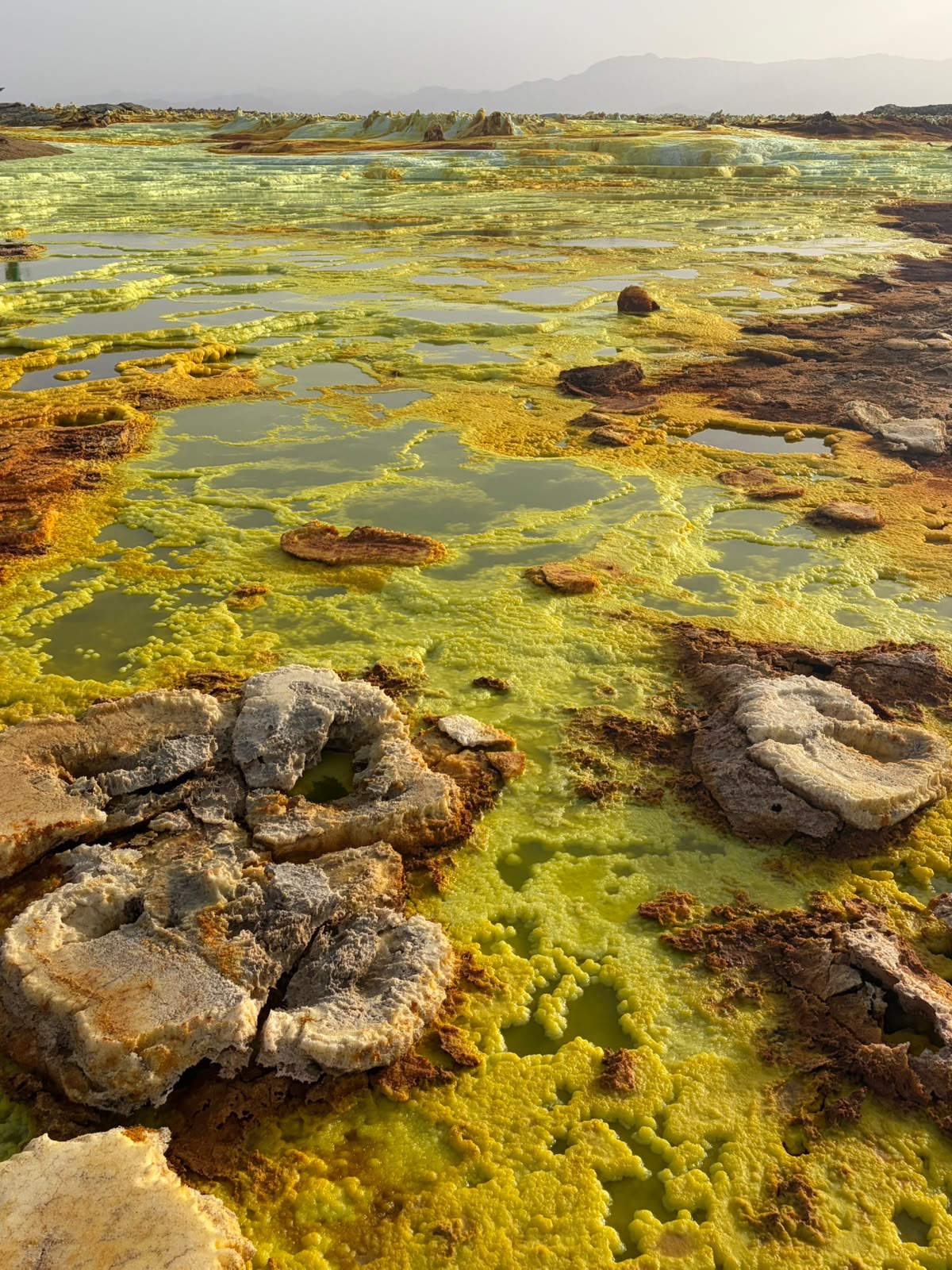
Sitting 125 metres below sea level in the Afar Triangle where three tectonic plates are pulling apart, the Danakil Depression is one of the most geologically extreme places accessible to travellers anywhere on Earth. The Dallol hydrothermal field produces neon yellow and green sulphur pools and salt crystalline formations that look designed rather than natural. The Erta Ale volcano, reached by night hike over basalt desert, contains a permanent lava lake, one of only six on the planet. Salt caravans of hundreds of camels cross the vast white salt flats each morning, moving slabs of hand-cut salt back to the highlands as they have done for centuries.

The rock-hewn churches of Lalibela

The rock-hewn churches of Lalibela

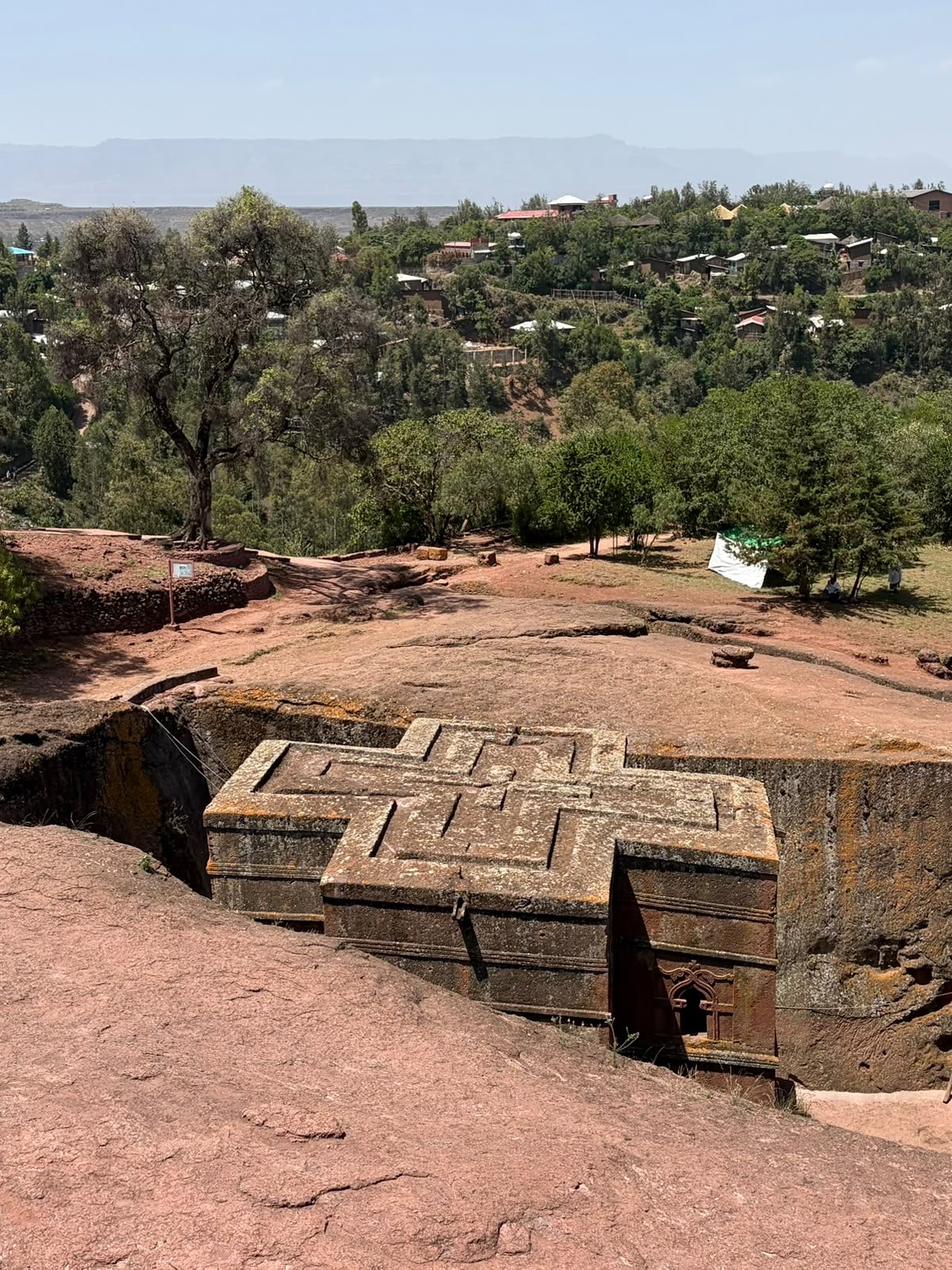
In the 12th century, the Ethiopian king Lalibela ordered the construction of a new Jerusalem in the Ethiopian highlands. The result was eleven churches carved from single pieces of solid red volcanic rock, each sunk into trenches cut from the surrounding plateau, connected by tunnels and passageways also carved from the rock. They are not buildings; they are subtractions from the earth. The largest, Bete Medhane Alem, is the biggest monolithic church in the world. The most photographed, Bete Giyorgis, is a perfect cross cut into a pit 12 metres deep. Every one of the eleven is still in daily use as an active house of worship, and arriving before dawn on any morning to find priests chanting by oil lamp, pilgrims prostrate on the stone, and incense rising in the cold highland air is to understand what a living religious monument actually means.

Gondar's castles

Gondar's castles

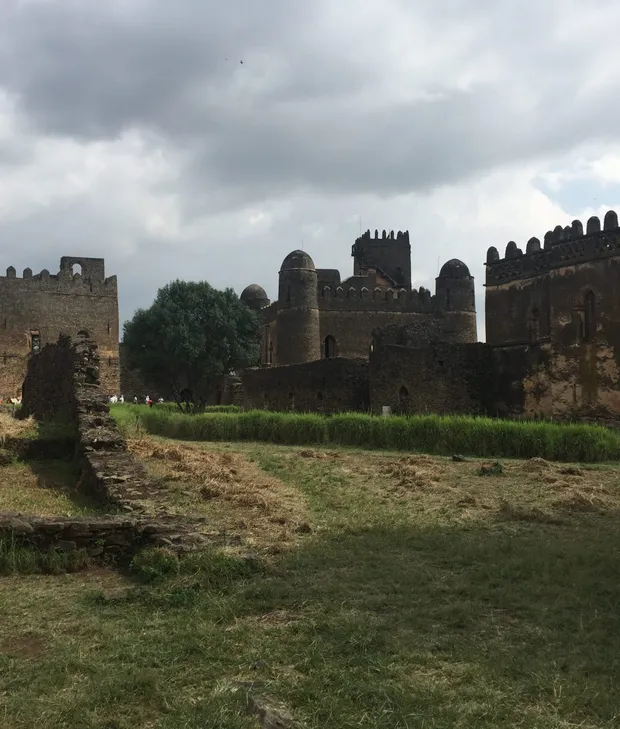
The Fasil Ghebbi in Gondar is the most improbable thing in sub-Saharan African architecture: a compound of six stone castles built over successive reigns of the Gondarine emperors in the 17th and 18th centuries, blending Ethiopian, Portuguese, Indian and Moorish influences into something that has no obvious precedent or parallel. The adjacent Debre Birhan Selassie church has a ceiling painted entirely with rows of cherub faces, the most reproduced image in Ethiopian religious art.

The route

Day 1: Arrive Addis Ababa / Bole area hotel, first evening on foot in the neighbourhood

Day 2: Addis Ababa / National Museum, Shiro Meda market, coffee ceremony and live music dinner

Day 3: Fly to Mekelle or Semera / join 3-day Danakil Depression tour, drive into the depression

Day 4: Danakil Depression / Dallol sulphur pools, salt lakes, salt flats and camel caravans

Day 5: Danakil Depression / sunrise at the salt lake, Erta Ale volcano hike, fly back to Addis

Day 6: Fly Addis to Gondar / Fasil Ghebbi royal compound and Debre Birhan Selassie church

Day 7: Gondar / day trip into the Simien Mountains, gelada baboon trekking and escarpment views

Day 8: Fly Gondar to Lalibela / arrive and explore the northern church cluster

Day 9: Lalibela / full day across both church clusters, Bete Giyorgis at golden hour

Day 10: Lalibela / outlying churches, Yemrehanna Kristos cave church and local market

Day 11: Fly Lalibela to Addis / recovery day, Entoto Hill, Mercato or Palace MuseumDays 12 to 14: Buffer days for flexibility, delays or optional extensions

Start the journey

The first part of the day-by-day route, free to read.

Day 1: Arrive Addis Ababa

Addis Ababa Bole International Airport (ADD) is one of the busiest aviation hubs in Africa and the main Ethiopian Airlines hub; almost every international arrival into Ethiopia comes through here. The airport is modern and efficient; arrivals take around 30 to 45 minutes from touchdown to being outside. Ethiopian Airlines operates most international routes into Addis; if you book your international flight with Ethiopian Airlines, you receive a 10 to 15% discount on all domestic flights, which is a meaningful saving given the number of domestic legs on this route.

Bole area as your base: The Bole neighbourhood, immediately surrounding the airport, is the right base for this itinerary. You will fly in and out of Addis multiple times on domestic connections, and staying in Bole removes the need to negotiate traffic into the city centre before each early morning departure. Look for a hotel with a confirmed 24-hour airport shuttle and secure luggage storage; both are essential features given that you will be leaving bags behind while on multi-day tours. Bole has walkable restaurant strips, reliable RIDE and Yango app coverage, and is a short rideshare into central Addis for the Day 2 activities.

Transport in Addis: Uber does not operate in Ethiopia. The two reliable rideshare apps are RIDE (no local number required to sign up, the more traveller-friendly option) and Yango (faster according to local reports but requires a local number to register). Download RIDE before you land and set it up in the airport arrivals hall. Avoid unmarked taxis; agree fares with registered taxis before getting in if you use them.

Connectivity: eSIMs work in Addis but become unreliable outside the city. Getting a local physical SIM on arrival from Ethio Telecom at the airport is the more reliable solution for the full route; signal on the Danakil tour and in Lalibela is limited regardless of SIM type, but having local data for Addis and Gondar makes the logistics of the city sections significantly easier.

Ethiopian Airlines domestic discount: When you purchase your international ticket with Ethiopian Airlines, keep the booking reference; the domestic discount is applied to bookings made through the same channel or directly with the airline at the domestic terminal. Book all domestic legs in advance, not on arrival; the Lalibela and Gondar routes in particular fill ahead.

Spend the first evening close to the hotel. Bole's main commercial strip has cafés and restaurants within walking distance of most hotels in the area. Eat something simple, get the jet lag calculation right, and sleep early; Day 3 begins with an early morning flight.

Get the full Ethiopia itinerary

  • The rest of the day-by-day route, 12 more detailed entries
  • Where to stay, by budget
  • Where to eat and drink
  • Practical reminders and cautions
  • Ways to shorten or extend the trip
  • 18 photos from the trip
  • A direct line to the traveller who led it

£12.99

One-time payment

Unlock this itinerary

Instant access. You'll confirm at checkout that this ends your 14-day right to cancel. Terms

Already bought it? Log in

From travellers on this trip

“Standing in the middle of those neon yellow sulphur pools in 45-degree heat at Dallol, I kept thinking the same thing: no photograph has ever come close to what this actually looks like. The Danakil was the most surreal place I have ever been in my life.”

Kelly Ottawa, Canada

“What nobody tells you about Lalibela is that it is still alive. I arrived before dawn on the second morning and found priests chanting in the dark by oil lamp with pilgrims prostrate on the stone around them. These are not ruins. They are the most active religious buildings.”

Susan Toronto, Canada

“The gelada baboons in the Simiens were completely indifferent to us. A troop of maybe three hundred animals, grazing along the escarpment edge with a thousand-metre drop behind them, and they just carried on. We sat with them for two hours.”

Michał Warsaw, Poland