The first part of the day-by-day route, free to read.
Day 1: Phnom Penh
Phnom Penh's Pochentong International Airport (PNH) is 7 km west of the city centre. Grab (Southeast Asia's Uber equivalent, works well throughout Cambodia) is the most reliable and cheapest option from the airport; download the app before landing. Tuk-tuks are also available from the airport and cost approximately $8 to $12 to most city-centre hotels depending on negotiation; agree the price before getting in. The city sits at the confluence of four rivers: the Tonlé Sap, the Mekong, the Bassac and the Tonlé Sap tributary, which gives the riverfront its wide, flat quality and explains why the French chose this site for their Indochinese capital.
Base yourself in the riverside area or the BKK1 neighbourhood (Boeung Keng Kang 1), the latter being the most concentrated area of good restaurants, cafés and guesthouses for independent travellers. The area around the Sisowath Quay riverfront is atmospheric for evenings but slightly more tourist-facing; BKK1 is where the city actually eats and socialises. Onederz Hostel is a reliable and social base.
Tuol Sleng Genocide Museum (S-21): Open daily 8 am to 5 pm. Entry $5 without audio guide, $8 with audio guide. Take the audio guide; it is essential and significantly better than reading the information boards alone. S-21 was a high school called Tuol Svay Prey before the Khmer Rouge converted it in 1975 into their most notorious security prison. Between 1975 and 1979, approximately 17,000 people passed through; fewer than a dozen survived. The classrooms were subdivided into tiny brick cells or used as torture chambers; the iron beds with shackles, the photograph walls showing prisoners on arrival, and the preserved interrogation rooms are all as they were found in January 1979 when Vietnamese forces entered and the remaining guards fled. Two survivors who were in the building when it was liberated gave testimony at the site for decades; one, Chum Mey, continued visiting until recently. Allow two hours minimum. Do not rush the photograph galleries; the individual faces are the most important thing in the building.
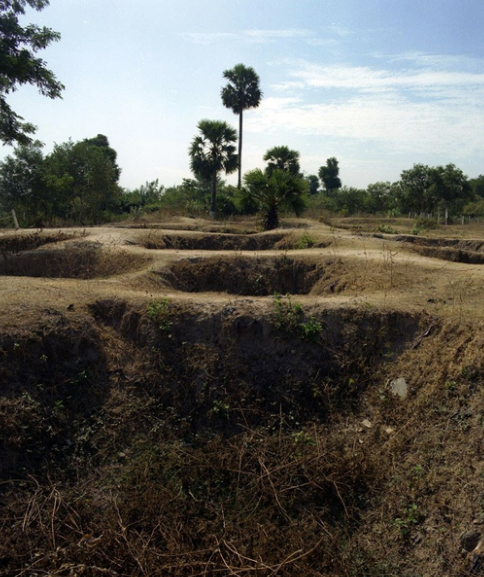
Choeung Ek Genocidal Centre (Killing Fields): 17 km south of central Phnom Penh, approximately 30 to 40 minutes by tuk-tuk. Entry $6, which includes the audio guide narrated partly by Him Huy, a former Khmer Rouge guard and executioner who describes what happened here from the inside. This is an extraordinary and difficult listening experience. The site was once a Chinese cemetery and fruit orchard; between 1975 and 1979 approximately 17,000 people were executed here, transported from S-21 when the prison had no more capacity. 86 of the 129 mass graves have been exhumed; the remainder were left undisturbed as a mark of respect. The Memorial Stupa at the centre of the site contains 5,000 skulls, arranged by sex and age of victim. The boardwalk path passes the numbered grave sites, the chemical pit, and the Killing Tree, a large palm tree against which small children were killed. Allow two hours. Dress modestly; this is a sacred site as well as a memorial.
Visit Choeung Ek before S-21 if possible, not after; the reverse order (S-21 then Killing Fields) can be emotionally overwhelming in sequence. Most tours do S-21 first; going independently by Grab allows you to choose the order. Both sites together take a full day; do not try to rush through either to combine them with other sightseeing.
Evening: Walk the Sisowath Quay riverfront as the city cools down. Street food vendors set up along the river in the early evening: grilled meats on charcoal, nom banh chok (rice noodle soup with green curry, Cambodia's most distinctive breakfast food which also appears at evening stalls), fresh sugar cane juice and papaya salad. The riverside is where Phnom Penh shows its more relaxed character; it runs for several kilometres and the light on the water at dusk is very good.
 Terra Nova Collective