Oman

Deserts, Wadis and Mountain Roads

Duration
9 days
Trip style
Road Trip
Effort
Moderate effort
Region
Middle East

Wild coasts, deep wadis and a desert you drive into alone.

A self-drive road trip from Muscat south along the coast, into the Wahiba Sands desert, through the historic city of Nizwa and up to Oman's highest mountain before returning to the capital.

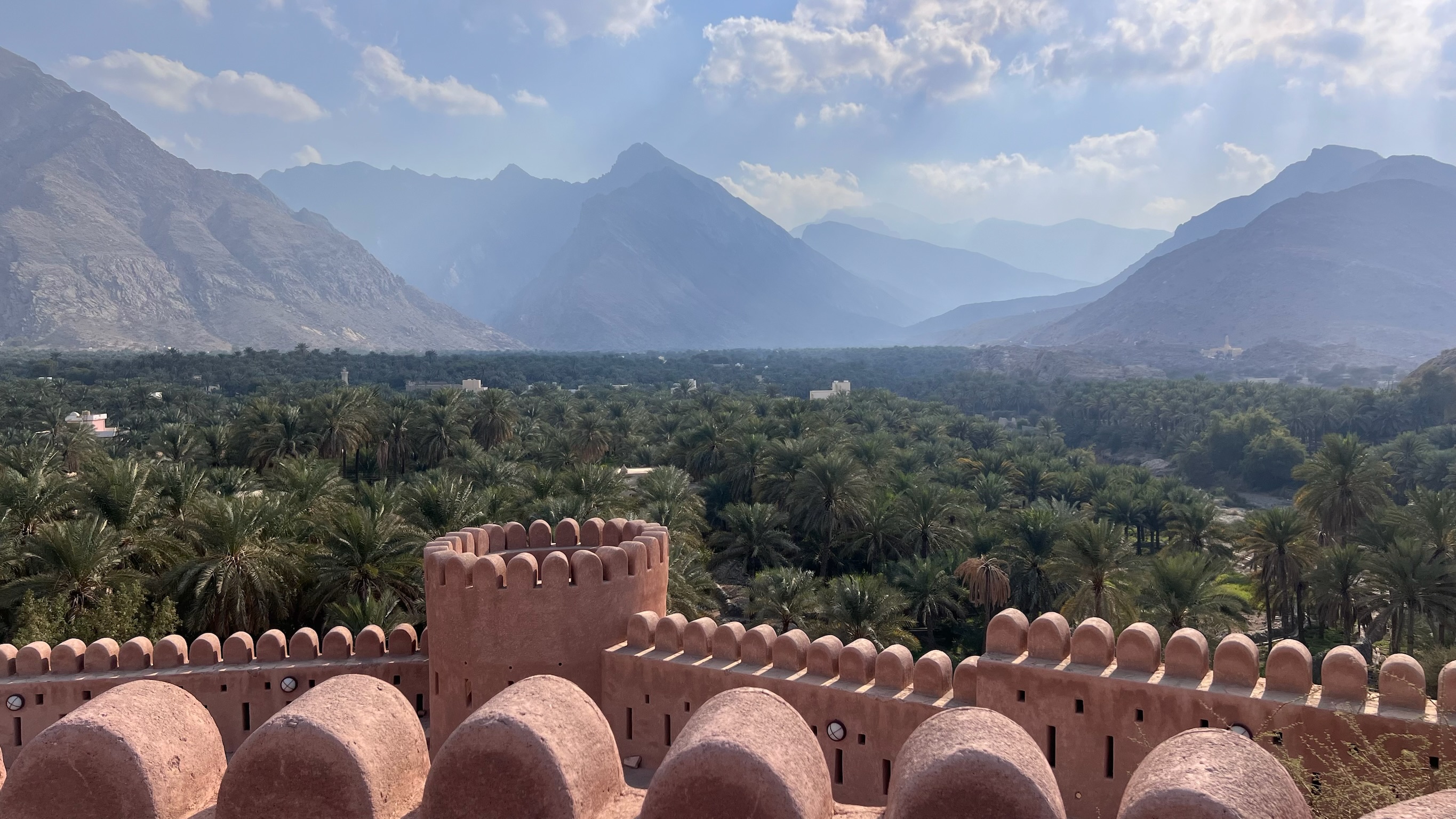
Oman is one of the most underestimated road trip destinations in the world. The country is vast, the roads are excellent, camping on public land is legal almost everywhere, and the landscape changes so dramatically between the coast, the desert, the wadis and the mountains that nine days never feels like enough. This itinerary covers the country’s strongest ground: the rugged coastline south of Muscat, the turquoise pools of Wadi Tiwi and Wadi Hawer, the turtle beaches around Ras Al Hadd, a night in the Wahiba Sands, the historic souqs and forts of Nizwa, the terraced villages of the Al Hajar Mountains, and the canyon rim of Jebel Shams at 3,000 metres.

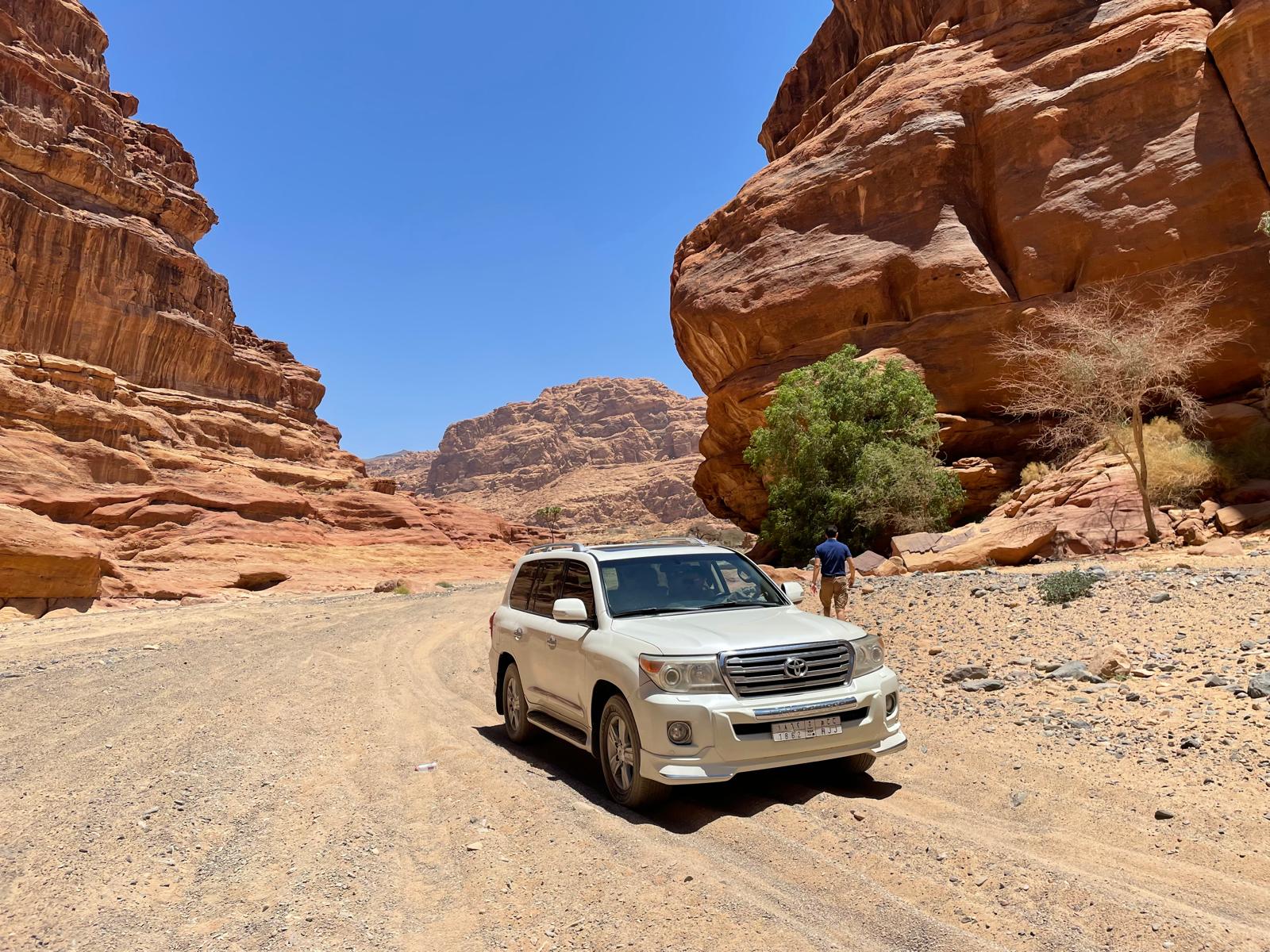
You need a 4x4 for this. The coastal and city sections are accessible in a standard car but the desert and the Jebel Shams road are not negotiable; the Wahiba Sands will swallow a normal car and the mountain road requires proper ground clearance. Rental companies in Muscat offer 4x4s with rooftop tent setups which are by far the most practical option for a trip that mixes beach camping with desert nights and mountain mornings.

The trip is built for independent travellers who want to move at their own pace, sleep where the light is good, and eat in villages rather than hotel restaurants. Oman is extraordinarily safe, surprisingly affordable once you are out of Muscat, and almost entirely free of the tourist infrastructure that softens other Middle Eastern destinations.

Highlights

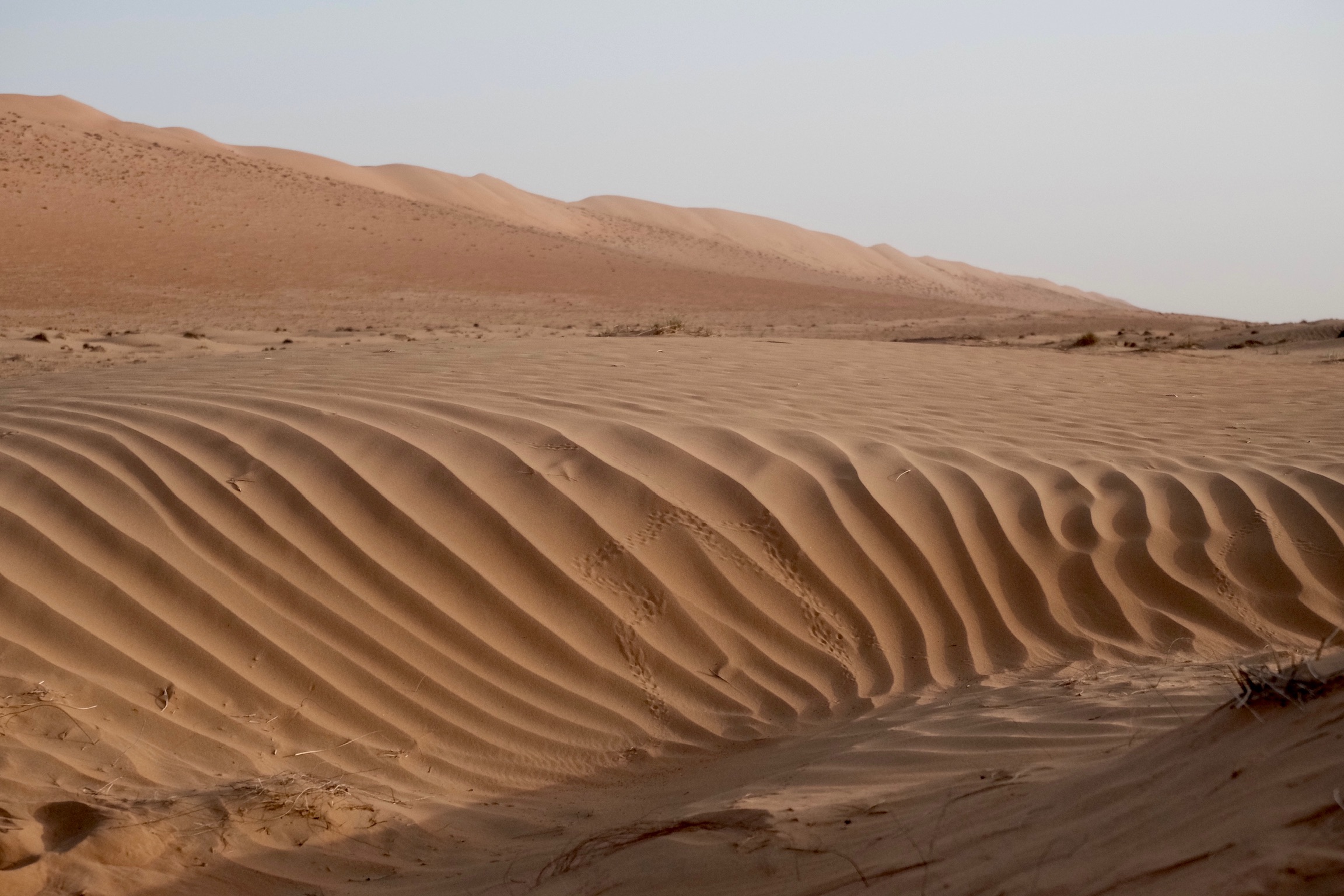
The Wahiba Sands

The Wahiba Sands

Drop your tyre pressure to roughly half, pick a valley between the parallel dunes and follow it as deep as you want to go. The sand dunes run in consistent parallel lines shaped by the prevailing winds, which means orientation is surprisingly easy even without a track to follow. At night the silence is total, broken only by passing camels and small desert rodents investigating your tent.

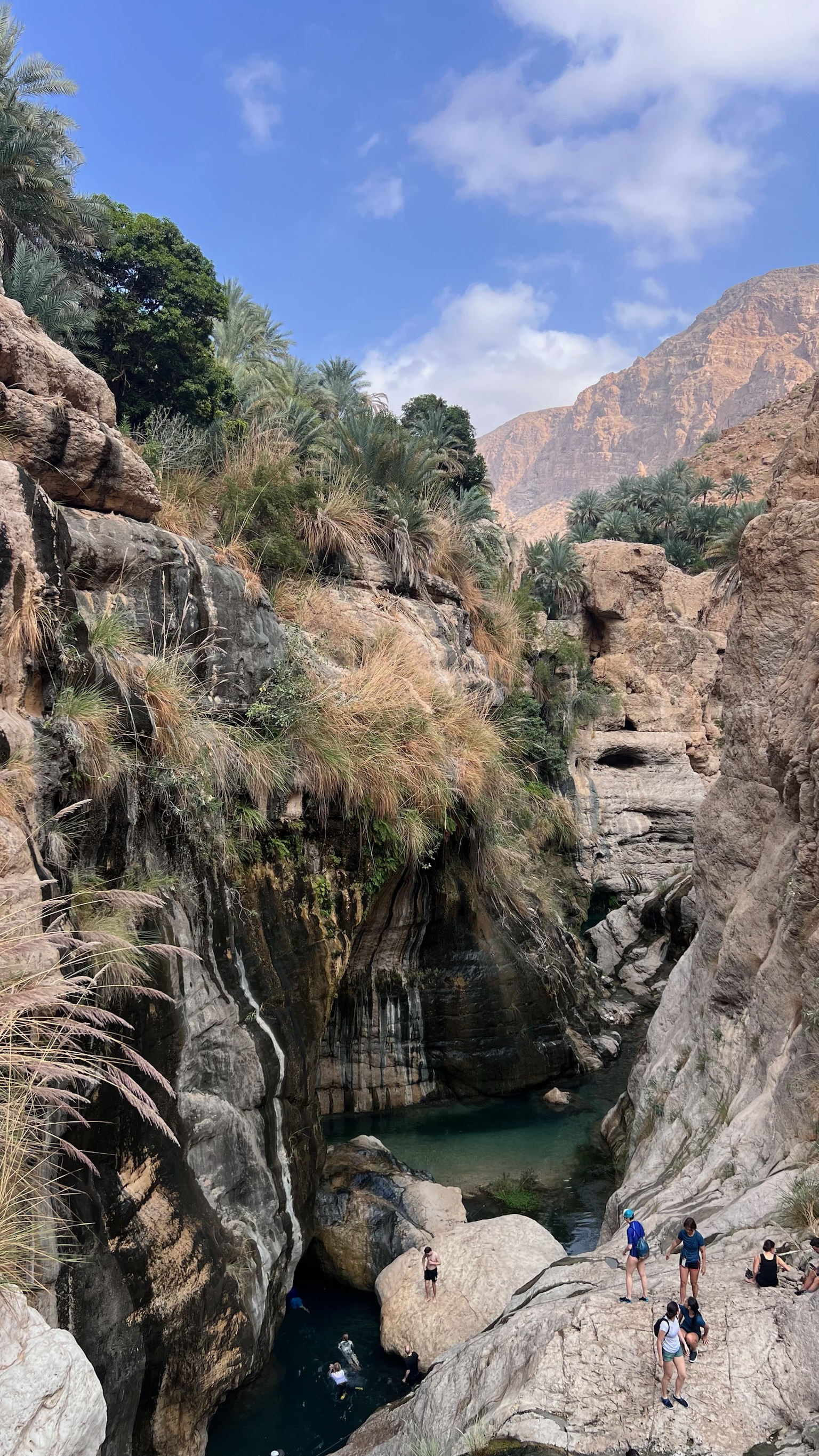
Wadi Swimming

Wadi Swimming

Wadis are the defining landscape feature of Oman: dry river valleys that channel spring water into deep, cold turquoise pools between canyon walls. Wadi Tiwi and Wadi Hawer are the best on this route. The approach to Tiwi is a rough drive through a narrow gorge with abandoned villages visible on the cliff ledges above; the pools at the end are clear enough to see the bottom at five metres depth. Wadi Shab nearby is equally beautiful but significantly more crowded in high season; Tiwi gives you the same quality with a fraction of the people.

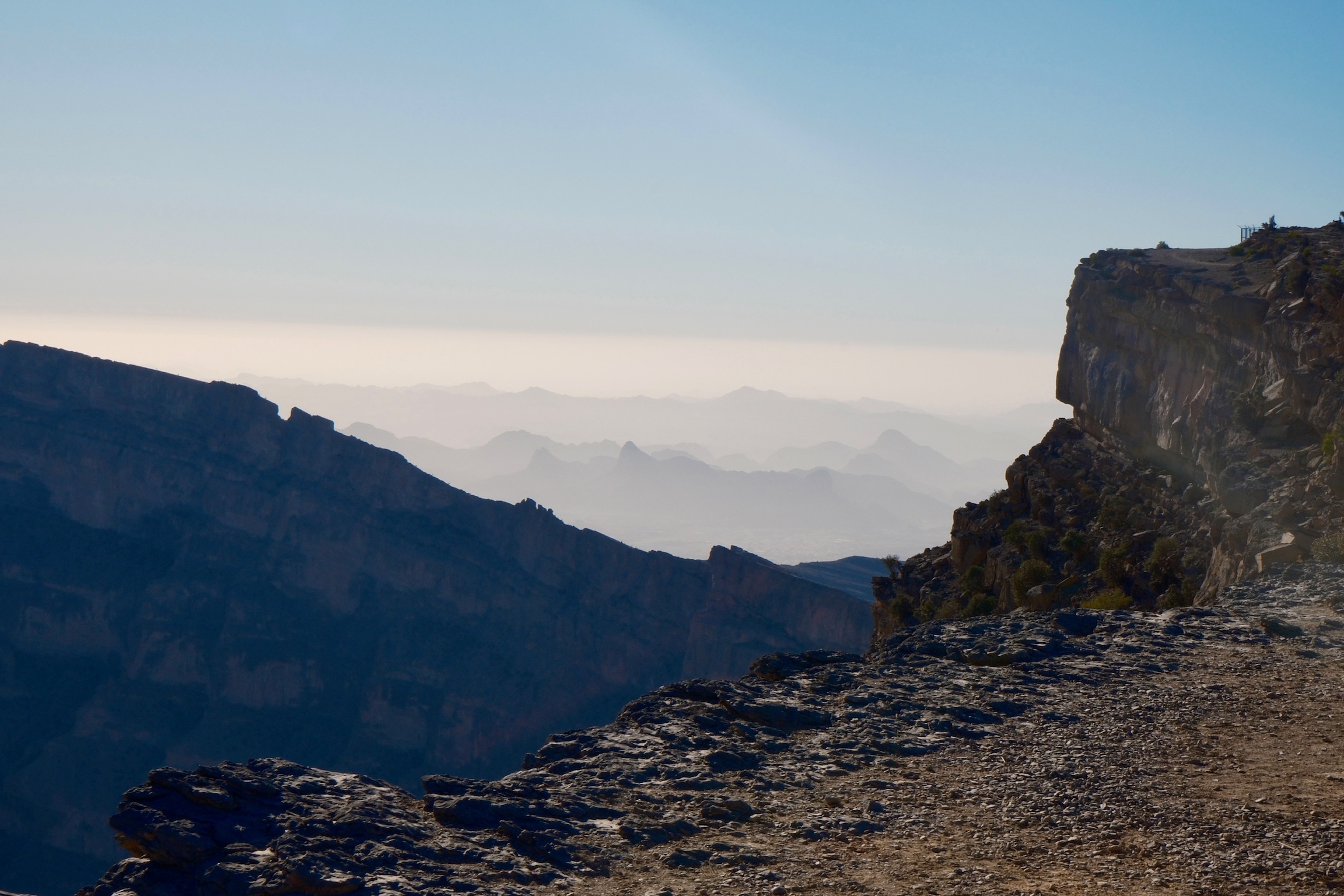
Jebel Shams and the canyon rim walk

Jebel Shams and the canyon rim walk

At 3,048 metres Jebel Shams is Oman's highest mountain, and the canyon alongside it, Wadi Ghul, drops nearly 1,000 metres from rim to floor. The Balcony Walk follows the canyon edge for several kilometres at a flat gradient with continuous views into the void below. The road up is a serious set of switchbacks that take 45 minutes to negotiate in a 4x4.

The route

Days 0 to 1: Arrive in Muscat / collect 4x4, Sultan Qaboos Grand Mosque, Mutrah Souq and coastal walk to Old Muscat

Day 2: Drive south along the A2 / camp on the beach at Fins

Day 3: Wadi Tiwi / wadi swimming, canyon exploration, cliff camp near Sur

Day 4: Ras Al Hadd / castle, Pink Beach and turtle coast, beach camp near Al Ashkharah

Day 5: Drive inland to Bidiyah / enter the Wahiba Sands desert, camp in the dunes

Day 6: Leave the desert / Wadi Hawer swim, drive to Nizwa, hotel near the old centre

Day 7: Nizwa souq / mountain drive to terraced villages, camp near Jebel Shams

Day 8: Jebel Shams Balcony Walk / descend to Ibri for lunch, return to Muscat

Day 9: Nakhal Fort / last souvenirs, fly out

Start the journey

The first part of the day-by-day route, free to read.

Days 0 to 1: Muscat

Muscat International Airport (MCT) handles most international arrivals. The city is spread across a series of coastal bays divided by mountain headlands; there is no dense urban core in the European sense, just neighbourhoods strung along the water and the main roads. Uber works reliably from the airport.

Book your 4x4 before arriving. There are not many rental companies offering vehicles capable of both the desert and mountain sections of this route, and good cars with rooftop tents are the first to go. The most practical setup is a 4x4 with a rooftop tent and camping gear included in the rental; this eliminates trunk space issues and means everything is set up in one booking. Recommended operators: idrive4x4.com, nomadtours.com and Al Maha Rental (almaharental.com). Cars like the Nissan X-Terra aregood and you can get camping gear separately through Nomad Tours; the separate gear setup ate trunk space so a combined booking is preferable. Collect the car first thing on Day 1 rather than waiting until Day 2; you need it to visit the mosque and the Mutrah area efficiently.

Sultan Qaboos Grand Mosque: the largest mosque in Oman, completed in 2001 to mark 30 years of Sultan Qaboos's reign, capacity 20,000. Inside: a single hand-woven Persian carpet covering 4,343 square metres and one of the largest chandeliers in the world. Non-Muslim visitors can enter between 8 am and 11 am, Saturday to Thursday only; closed on Fridays. Dress code is strict: shoulders and knees covered for both genders, women require a headscarf. The building is worth 90 minutes. Go in the morning before the heat builds.

Mutrah: the old port district, 15 minutes from the mosque by car. Mutrah Souq is Muscat's most characterful market: a covered labyrinth of alleys selling frankincense, khanjar daggers, silver jewellery, spices, abayas, and tourist goods ranging from excellent to terrible. It is more tourist-facing than the interior souqs you will see in Nizwa, but big and genuinely easy to get lost in for an hour. Buy frankincense here if you want to take some home; the quality is good and the prices honest.

From the souq, walk the Mutrah Corniche west toward Old Muscat. The walk to Al Alam Palace takes about an hour at a relaxed pace (4 km). The palace itself is the Sultan's ceremonial residence, in its current gold-and-blue form since 1972, flanked by the 16th-century Portuguese forts of Al Jalali and Al Mirani on either side. You cannot enter; the exterior and the waterfront approach are the point. The forts are a reminder that Muscat was an important Portuguese outpost from 1507 until the Omani reconquest in 1650, and the architecture of the old fortifications reflects that particular chapter clearly.

Muscat is the only place in Oman where free camping is not practical. Stay in a hotel for the first and last nights.

Get the full Oman itinerary

  • The rest of the day-by-day route, 8 more detailed entries
  • Where to stay, by budget
  • Where to eat and drink
  • Practical reminders and cautions
  • Ways to shorten or extend the trip
  • 25 photos from the trip
  • A direct line to the traveller who led it

£12.99

One-time payment

Unlock this itinerary

Instant access. You'll confirm at checkout that this ends your 14-day right to cancel. Terms

Already bought it? Log in

From travellers on this trip

“Sleeping in the Wahiba Sands and looking up at the Milky Way that night was the best. No light, no noise, as a big stargazer I spent hours looking up.”

Emilio Stockholm, Sweden

“Driving into the desert for the first time, just and a 4x4 and nothing but dunes in every direction, felt genuinely empowering.”

Bianca Brussels, Belgium

“The Nizwa souq was very entertaining - watching the livestock market, the silver traders, the dates and the frankincense changing hands, it felt like a version of commerce that hasn't changed in centuries.”

Gaia Padova, Italy